Witamy w HMQY Części samochodowe

Jak sprawdzić historię eksportu i dotychczasowe osiągnięcia dostawców części samochodowych
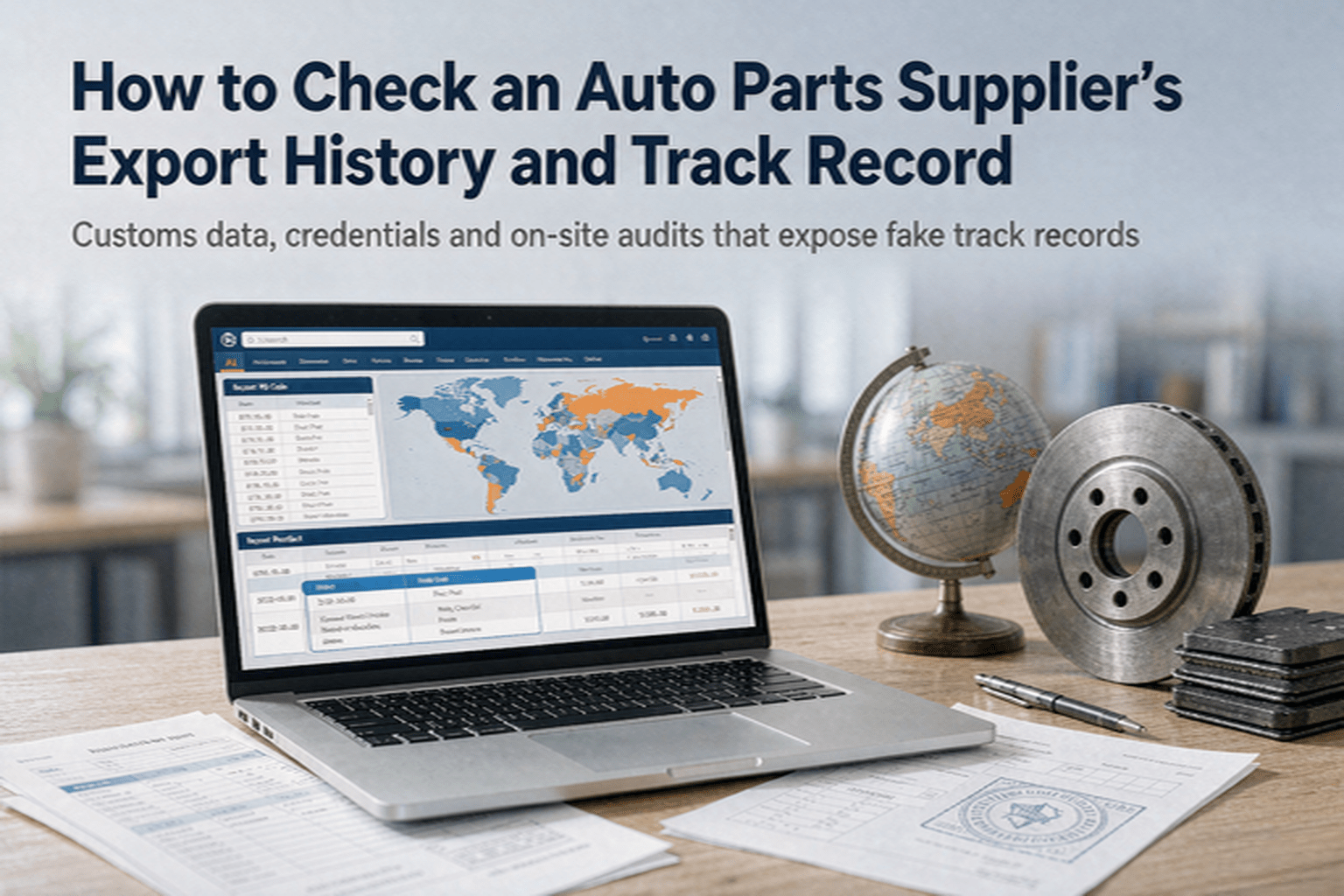
How to Check an Auto Parts Supplier’s Export History and Track Record
Against the backdrop of volatile global automotive aftermarket supply chains in 2024, 38% of small and medium-sized auto parts importers in North America and the EU reported losses exceeding $100,000 last year due to unvetted suppliers that falsified export experience, delivered counterfeit components, or failed to meet cross-border compliance requirements, according to data from the Auto Aftermarket Suppliers Association (AASA). Conducting a thorough audit of a potential supplier’s export history and operating track record has become a non-negotiable step to reduce supply chain risks, rather than an optional verification procedure for procurement teams of all sizes.
Verify Official Customs and Cross-Border Trade Databases
The most objective source of export history data comes from public regulatory records, which are far less likely to be falsified by suppliers than self-provided promotional materials.

Leverage Public National Customs Platforms
Most major trading economies have open customs data query systems accessible to registered business entities. For U.S. importers, the Customs and Border Protection (CBP) Automated Commercial Environment (ACE) public portal allows users to check a supplier’s past 7 years of declared export records to the U.S. market, including information on detainment of non-compliant goods, tariff classification violations, and product safety non-conformity records. EU buyers can access the EU Customs Information Portal to review a supplier’s history of passing CE marking inspections for auto parts. A 2023 AASA survey found that 32% of suppliers that delivered counterfeit brake components or airbag parts to North America had 3 or more unreported CBP detainment records, which could be easily identified via free public customs queries if procurement teams took the time to check.
Third-Party Verified Trade Data Aggregators
For cross-regional full-history checks, professional trade data platforms including Panjiva, ImportGenius and Descartes Datamyne integrate customs records from over 190 economies, providing 10 to 15 years of continuous export track records for qualified auto parts suppliers. These platforms display details of each individual shipment, including actual overseas consignees, declared cargo value, exact product specifications, and transport routes, eliminating the possibility that suppliers forge fake export certificates for non-existent transactions.
Cross-Reference Industry Credentials and Independent Client Testimonials
Customs data only shows basic shipment facts, while industry credentials and real client feedback can reflect the supplier’s actual service quality and long-term track record in the auto parts sector.
Check Public Ledgers of Automotive Industry Certifications
Formal qualified auto parts exporters usually hold industry-specific certifications such as IATF 16949 for automotive production quality management, and E-mark certification for components sold to the EU market. The official public query platforms of these certification bodies will clearly record the supplier’s certified product categories, main target export markets, and even past non-conformity records during annual audits. If a supplier claims to have 10 years of experience exporting OE-grade suspension parts to German automakers, but their public IATF 16949 record does not list any German market related operation history, their claimed export track record is highly likely to be falsified.
Validate Verifiable Past Client References
Instead of accepting polished, generic recommendation letters provided by suppliers, procurement teams should request contact information for 3 to 5 independent overseas clients that the supplier has cooperated with in the past 3 years, covering different regional markets and different order sizes. Before contacting the references, buyers should first verify the legal registration information, business scope and actual operation scale of these overseas client companies to rule out the possibility that the supplier provides contact information of shell companies controlled by related parties. During the call, ask specific questions about average order fulfillment lead time, after-sales defective rate, and response speed for customs compliance document requests, rather than general questions about overall satisfaction.
Audit Operational and Document Track Records Directly
For large order transactions with an annual value of more than $500,000, a direct audit of the supplier’s internal records and on-site operation status can further eliminate hidden risks that cannot be found through public data queries.
Review Continuous Export Documentation Trails
Request the supplier to provide redacted copies of ocean bills of lading, export customs declaration forms, and foreign exchange settlement vouchers for the past 24 months. Buyers should check whether the HS code listed on these documents matches the category of auto parts they intend to purchase, and pay special attention to records that repeatedly modify product descriptions, or use vague, non-specific HS codes. These abnormal records are usually associated with suppliers that evade environmental tariffs or export uncertified counterfeit parts to avoid customs inspections.

Conduct Third-Party On-Site Audits
Hire independent, qualified third-party testing and auditing institutions such as SGS or TÜV SÜD to conduct an unannounced on-site audit of the supplier’s production facility. Auditors will cross-verify the supplier’s internal production ledgers, outgoing shipment records, and inventory status with the export scale data the supplier claims. Multiple industry audit cases show that nearly 40% of small auto parts suppliers that claim to have an annual export value of $5 million or more have actual annual shipment volumes of less than $1 million, and cannot support large-scale continuous order delivery at all.
As global automotive supply chains continue to become more interconnected, verifying a supplier’s export history and track record is no longer a process designed to pick out unqualified partners, but a core step to build long-term, stable mutually beneficial cooperation. With the popularization of AI-powered cross-border trade data verification tools, the cost of completing a full auto parts supplier track record audit is expected to drop by more than 70% by 2026, allowing small and micro importers to access the same level of supplier risk control capabilities that were previously only available to large global automakers.


